
The top scientist said India's ambition should be to do something which no other nation has attempted so far.
India has offered to place 14 of the 22 thermal power reactors under IAEA safeguards in a phased manner between 2006-14, Dr Kakodkar told a media conference, adding the agreement would not affect the country's strategic programme in any respect.
Dr Anil Kakodkar, chairman of India's Atomic Energy Commission and his agency was the 600-pound gorilla in the room that vetoed the compromise language on the stalled bilateral civilian nuclear cooperation accord, known as the 123 Agreement.
The safeguards issue is unlikely to come up at Thursday's meeting of IAEA's Board of Governors and will come up for approval at a special Board meeting later. IAEA Director General Mohamed El-Baradei and Atomic Energy Commission chairman Anil Kakodkar initiated the talks.
Nuke scientists support AEC chief's contention
The Centre is reviewing the security measures at nuclear power plants across the country, in the wake of the recent terror strikes in Mumbai, Atomic Energy Commission Chairman Anil Kakodkar said on Thursday."Several security measures have already been put in place. We are reviewing in the context of what happened in Mumbai and certainly whatever additional (security), which are necessary, we will put in place," he said.
Amid the diplomatic and political storm generated by the disclosures on the India-United States nuclear deal, US Ambassador to India David Mulford met Prime Minister Manmohan Singh in New Delhi on Thursday and sought to clarify Washington's stand.Although officials were tight-lipped about what was discussed at the meeting, sources said Mulford told the Prime Minister that no new conditions had been introduced.A senior US embassy official sought to play down the meeting.
New Delhi has made it clear that the issue of reprocessing of spent fuel is 'non-negotiable' and it is committed to retaining the right to do so.
Dr Kakodkar made light of the suggestion that the NSG would meet only in April 2007, which could possibly impact the deal.

Despite optimism that the deal will be sealed, differences marred talks between the two sides.
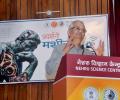
'Why should we disclose classified information to satisfy those who doubt our Hydrogen Bomb capability?'
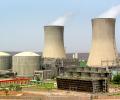
'Chinese are going bang, bang, bang building 30-35 reactors.' 'We should announce a programme of 50 new reactors and show that we mean business on the ground and not just announcements.'
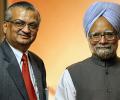
'Dr Singh, visibly relieved, said, 'Yesterday night I couldn't sleep. I stayed awake, praying throughout. You have saved the country'.' A fascinating excerpt from former atomic energy chief Dr Anil Kakodkar's memoir Fire And Fury: Transforming India's Strategic Identity.

'There has definitely been a breakthrough in the nuclear logjam. It is good to see nuclear energy back on the rails,' says Dr Anil Kakodkar, former chairman, Atomic Energy Commission.

Were the May 1988 nuclear tests a success? 20 years after Pokharan, a look back at those decisive atomic tests through the eyes of someone who knew.

Barely days after imposing a 40 per cent export tax on onions to cool down soaring prices, which, in turn, triggered widespread protests across the main growing belts, the Centre on Tuesday sought to mitigate both political and economic tensions gripping parts of Maharashtra. It decided to procure an additional 200,000 tonnes of onions at Rs 2,410 per quintal for its buffer stock from farmers, a rate that is strikingly close to the price at which they were being exported before the 40 per cent duty was levied on August 19. The export price before the imposition of the duty stood at around $320 per tonne free on board (approximately Rs 2,650 per quintal).
It is important to approach the belief of people in ancient India's achievements with a sense of proportion, balance and empathy, argues B S Raghavan, the distinguished civil servant.

"I am an academic and I have always made it clear that my ultimate home is in the realm of ideas," Rajan said in a letter to staff.
 © 2026 Rediff.com - Advertise with us - Disclaimer - Privacy Policy - Sitemap - Feedback - About us - Terms of use - Grievances